 AxionMind
Approach
Seven steps, a sign‑off at each, and you keep everything.
AI agents on our platform draft each step, an independent AI reviewer checks it, our engineers refine it, and you approve it. Nothing moves to the next step without your sign-off.
Step 01
Brief
- You give us
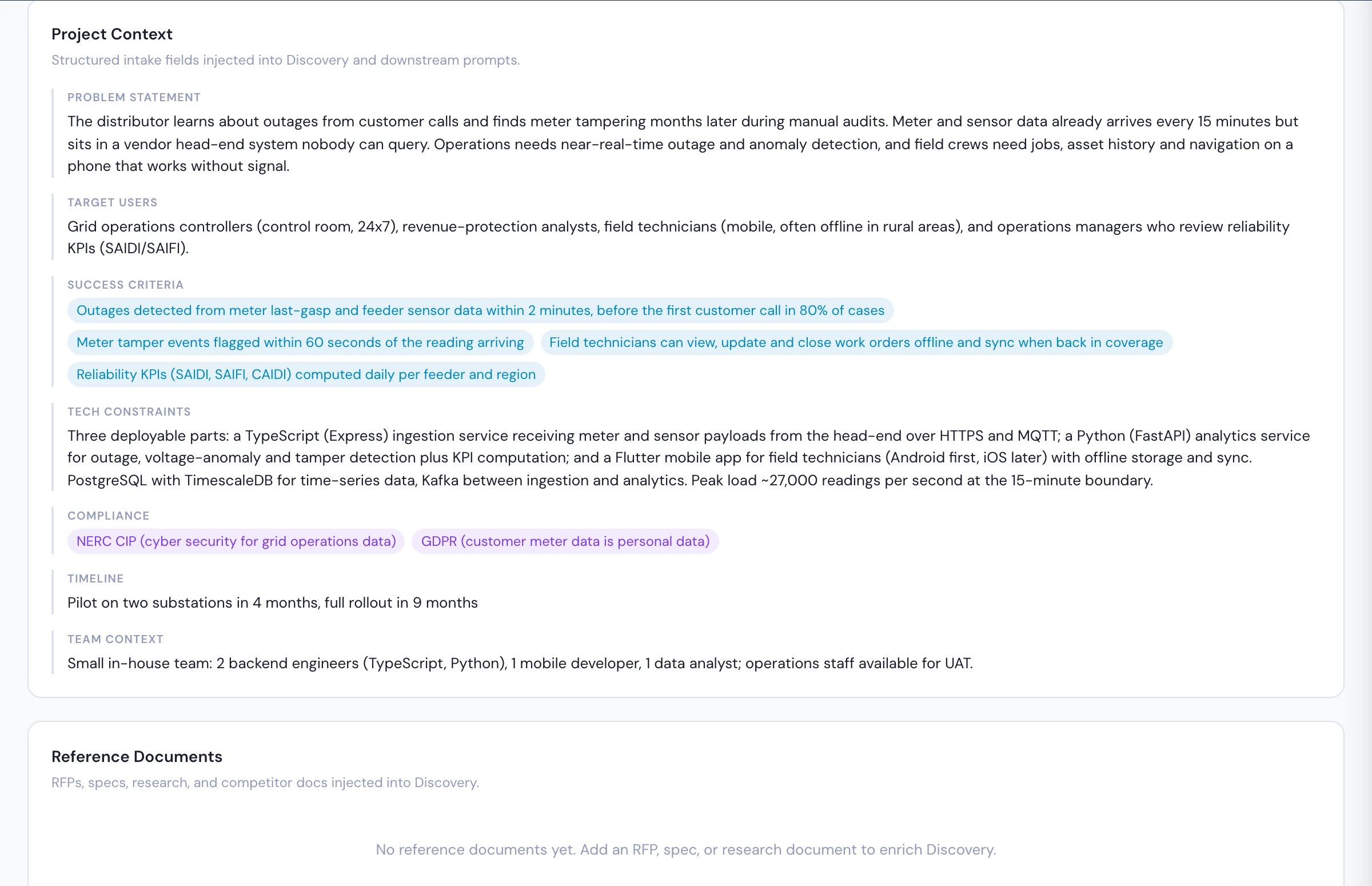
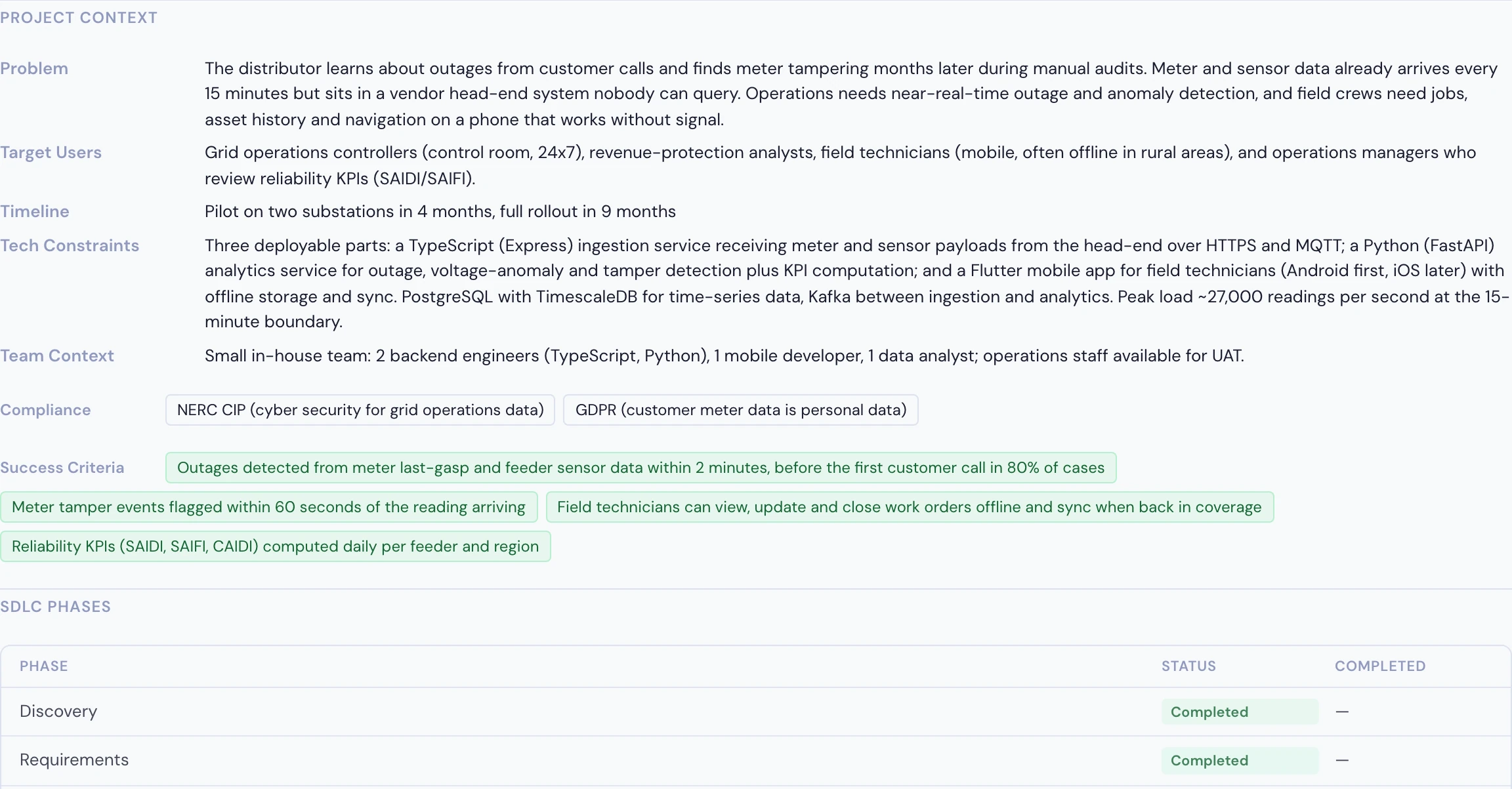
- The problem in your words: a page, a call, or the documents you already have.
Step 02
Business case and Statement of Work
You sign off
- You receive
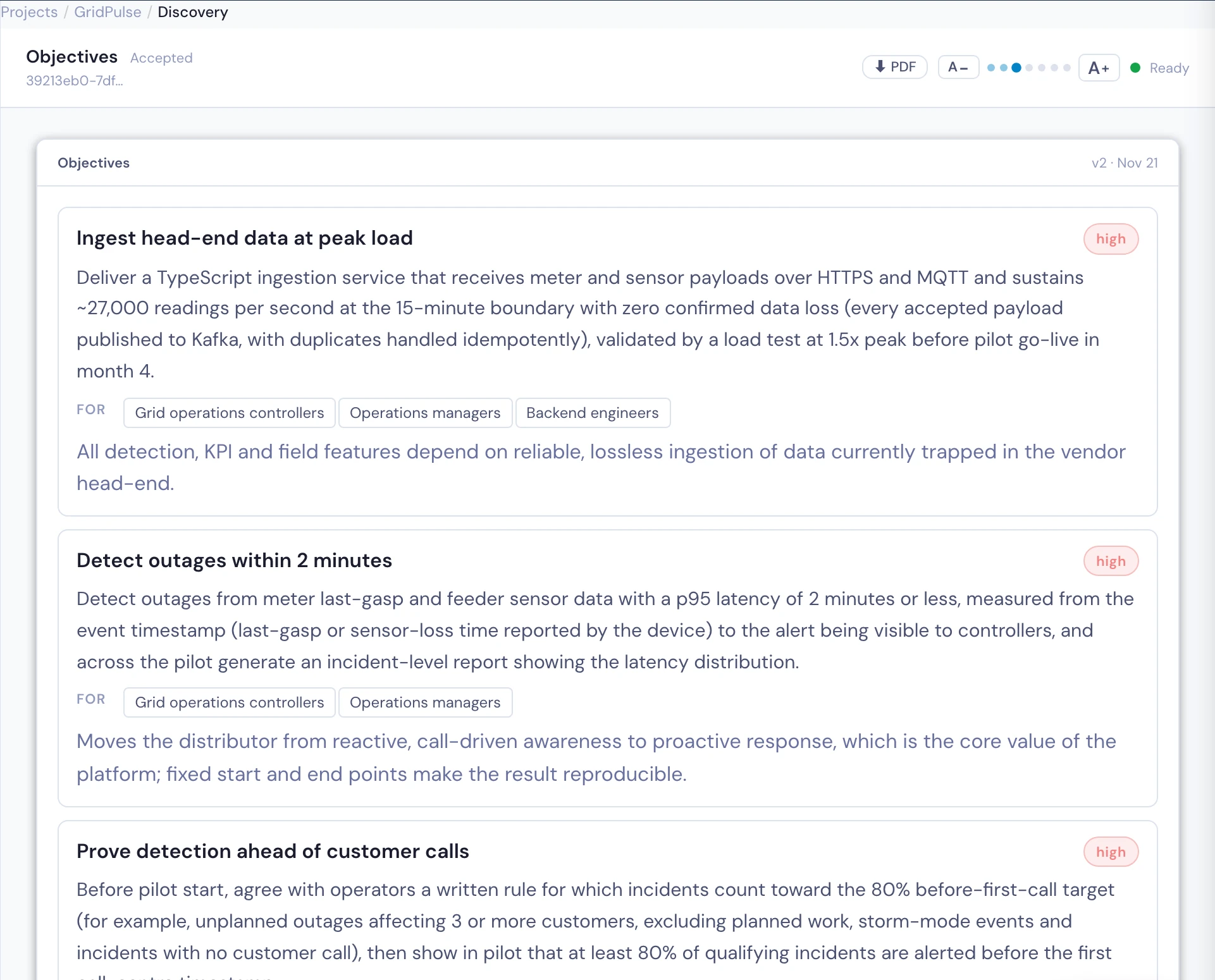
- Research, stakeholders, measurable objectives, scope and exclusions, a conceptual blueprint, the Statement of Work and the KPIs for success.
- Example
- OBJ-002 “Detect outages within 2 minutes”, measured from the device event time to the alert being visible to controllers.
Step 03
Specification
You sign off
- You receive
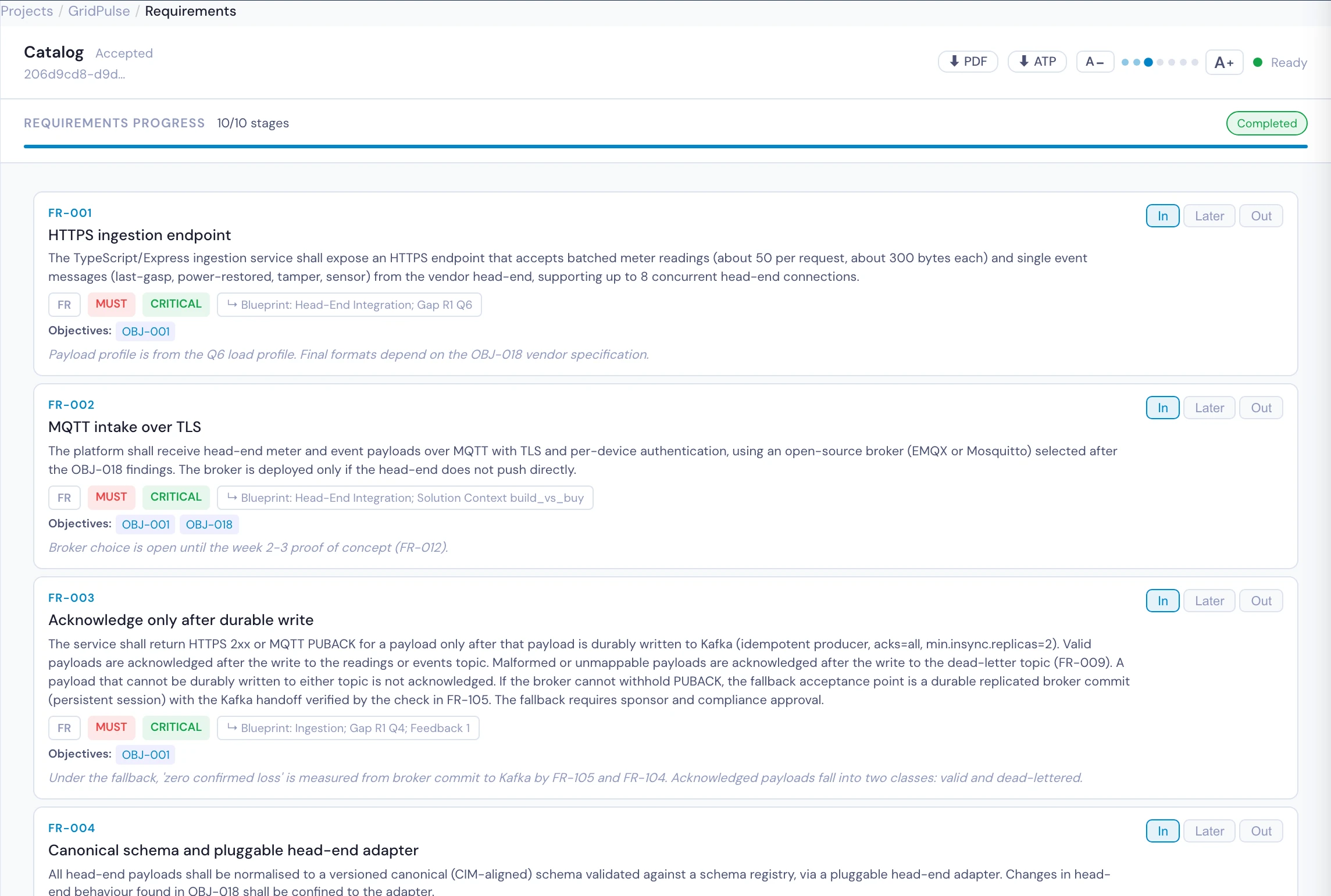
- A catalog of every requirement with a stable ID and priority, epics, user stories with acceptance criteria, workflows, a compliance matrix and the acceptance test plan.
- Example
- FR-016 “Raise a Suspected outage incident as soon as at least 3 meters, or at least 20% of meters under one transformer, have sent last-gasp within a 60 s window.”
Step 04
Screens and architecture
You sign off
- You receive
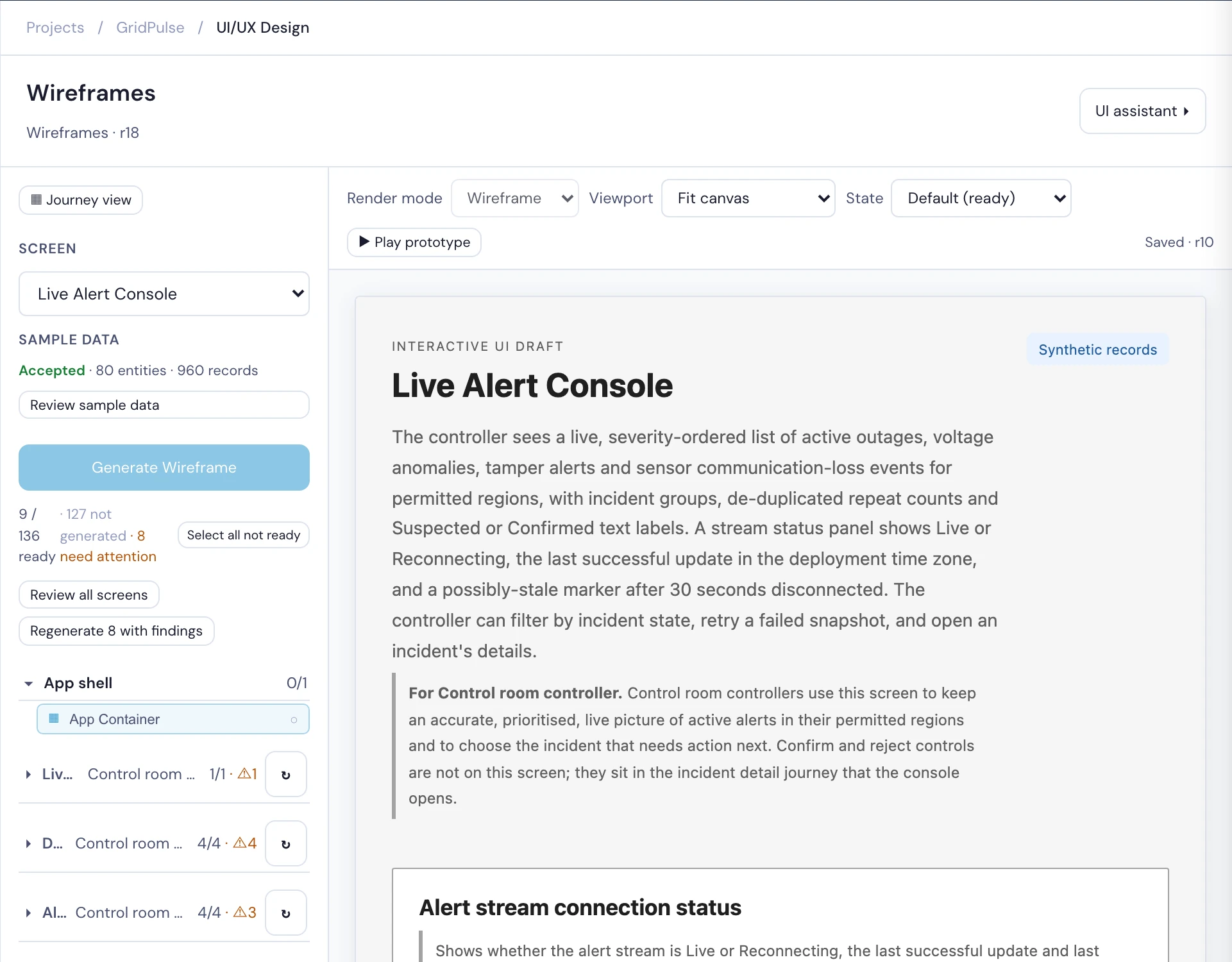
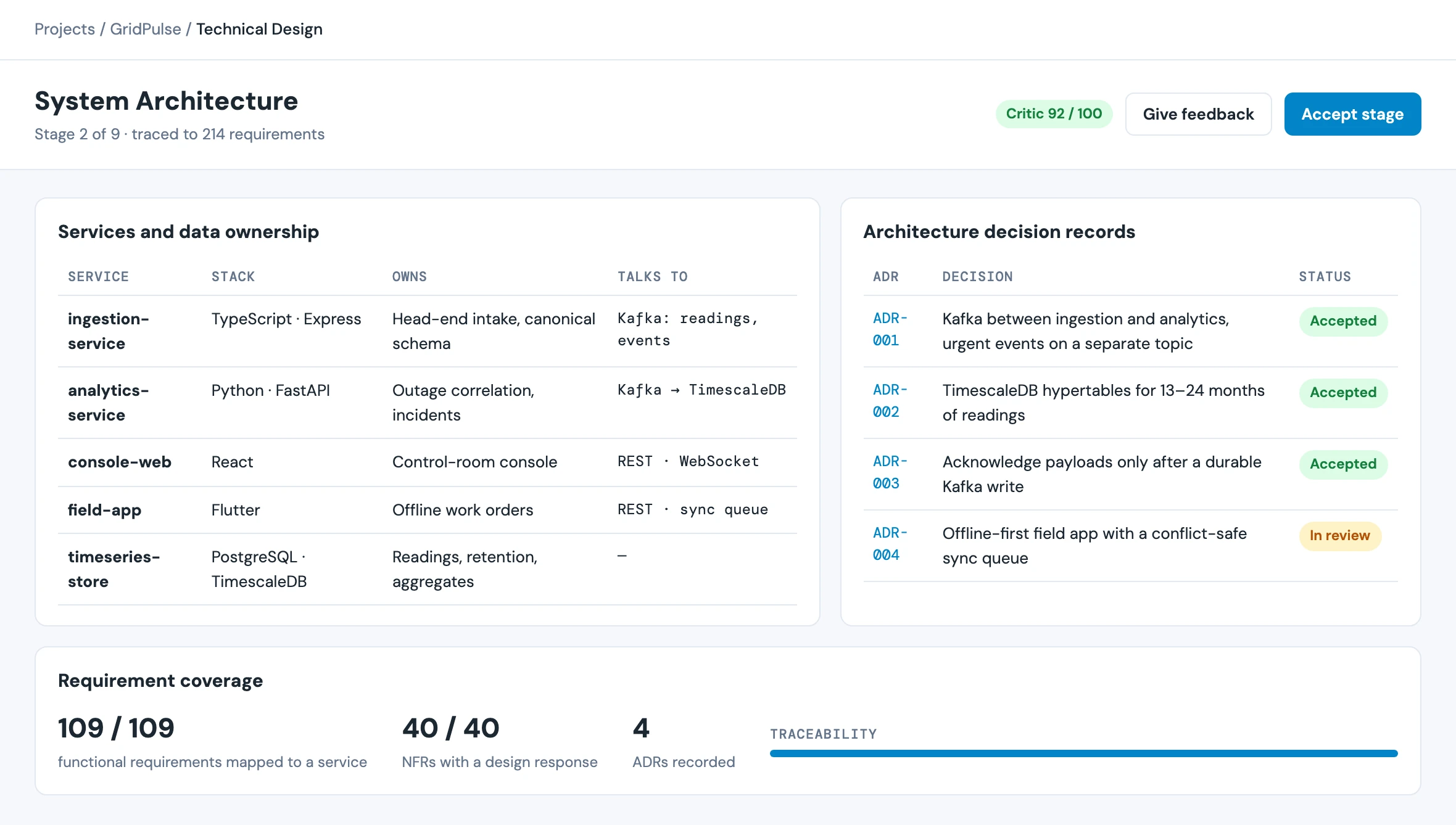
- User journeys, a screen inventory showing where each acceptance criterion is seen, wireframes with realistic sample data, and the technical design: stack, architecture, data model, API contracts, security design, decision records and the integration test plan.
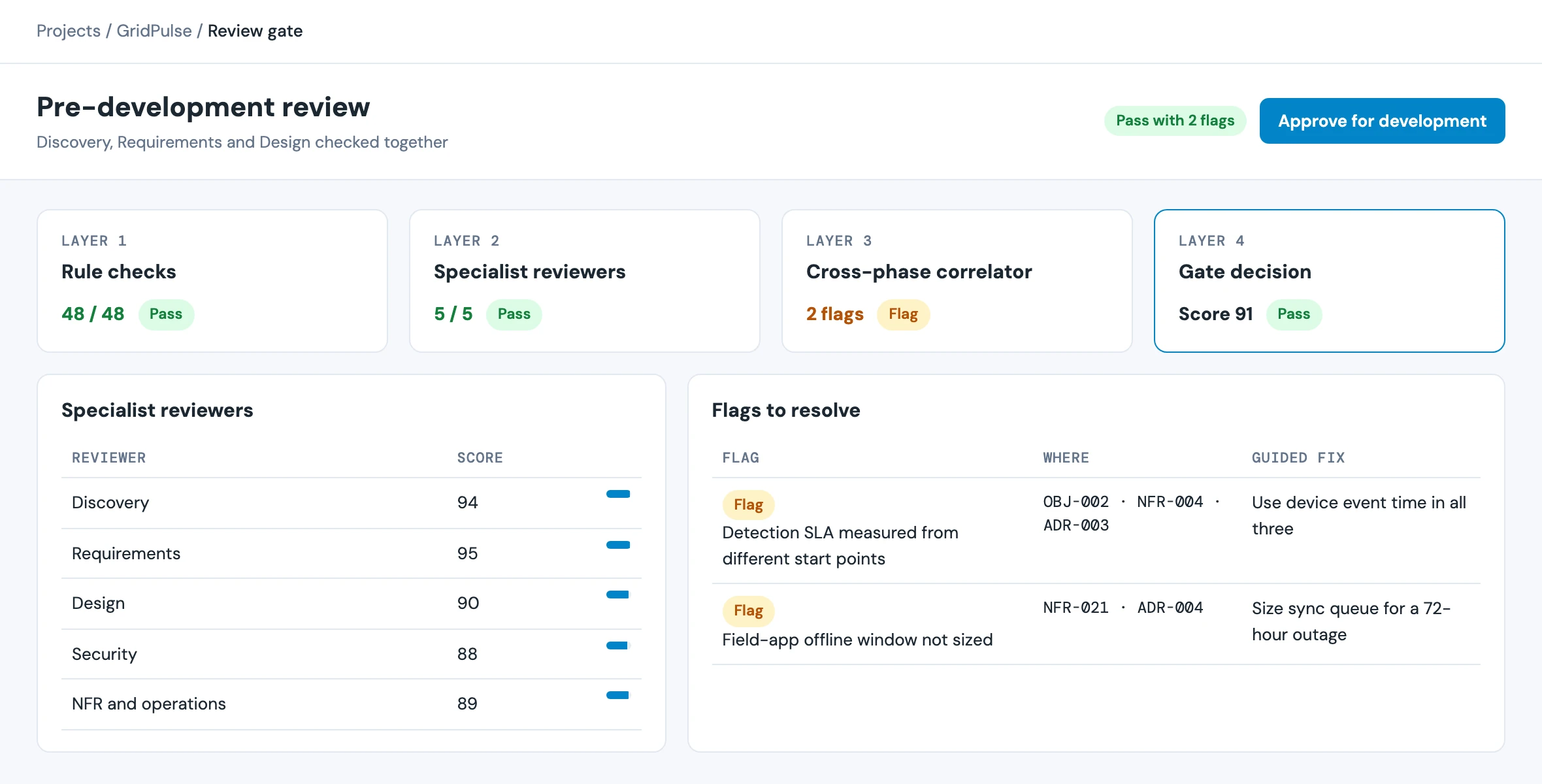
- Before code
- A review gate checks the business case, specification and design together, so mismatches are fixed in a document, not in code.
Step 05
Build
You sign off
- You receive
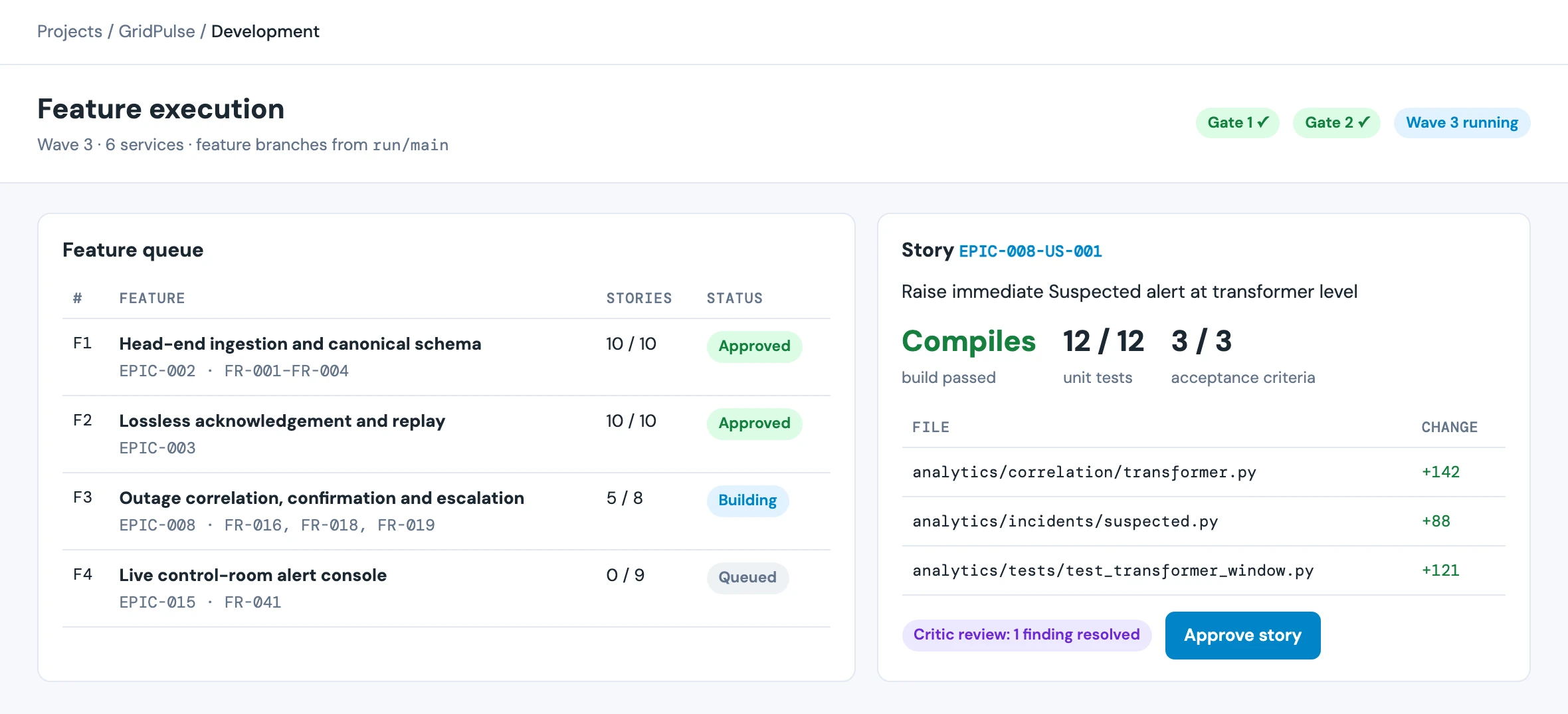
- Code in your own Git repository, feature by feature, with each feature traced to its stories. Builds run in isolated environments and code is committed only once it compiles.
Step 06
QA
You sign off
- You receive
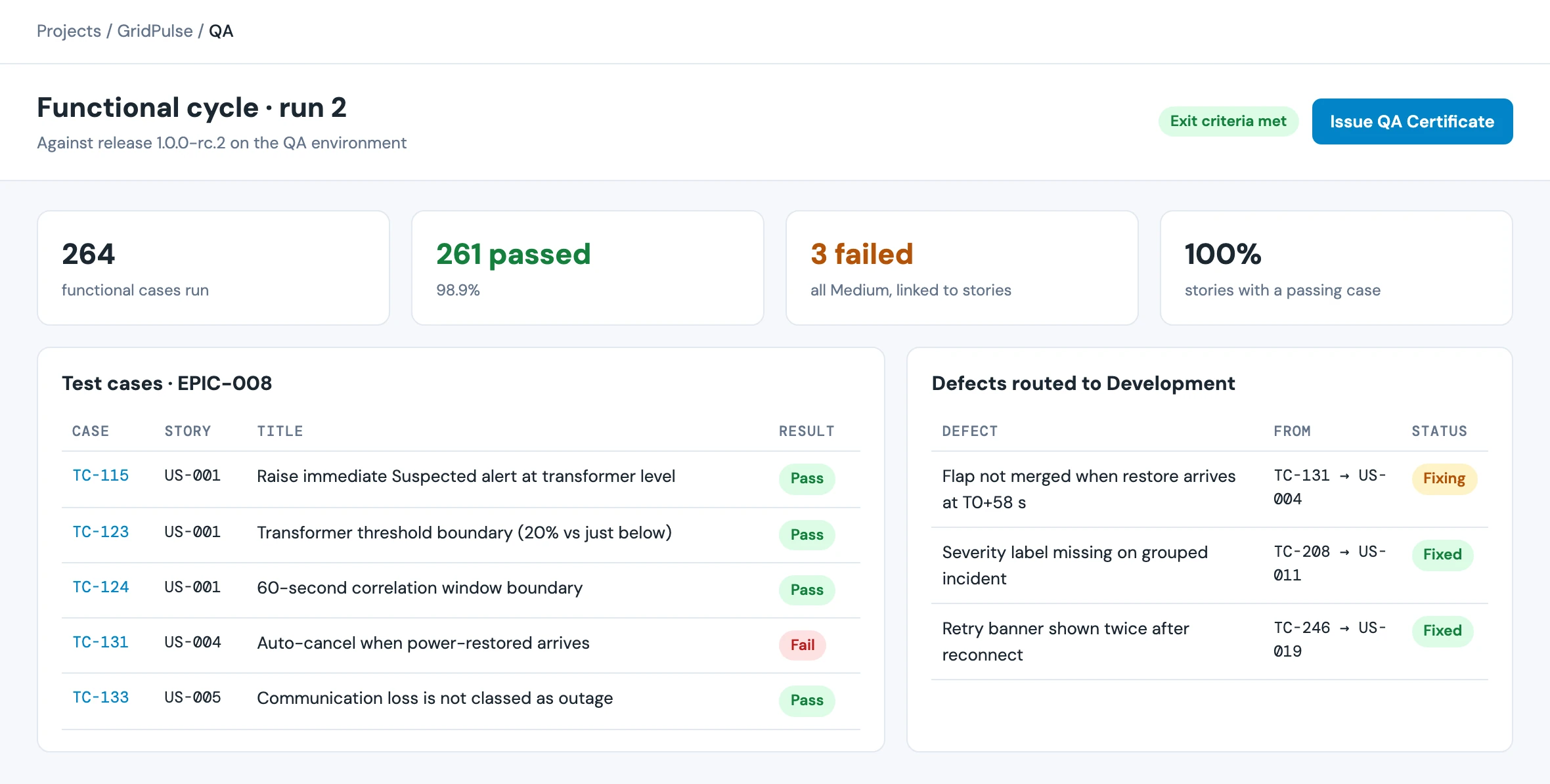
- Test cases from every acceptance criterion, run against the deployed build, defects linked back to their stories, and a QA Certificate with the release recommendation.
- Example
- TC-115 tests story EPIC-008-US-001, which serves FR-016 and objective OBJ-002.
Step 07
Release
You sign off
- You receive
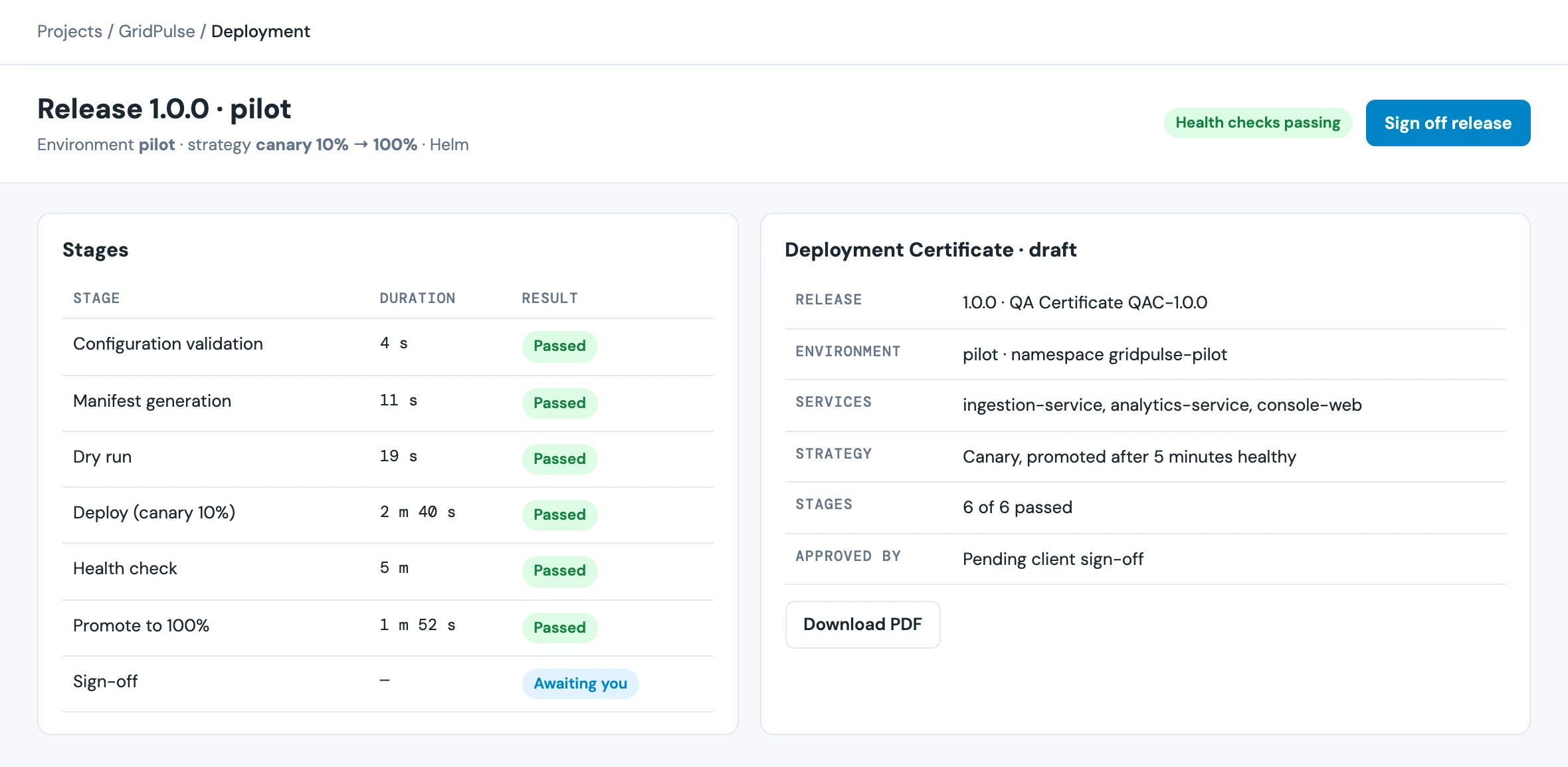
- A validated deployment to your Kubernetes environment, and a Deployment Certificate recording what was released, where and how.
When something changes, you see exactly what it touches.
Change a requirement and the platform marks every downstream story, screen, design element and test that depends on it. We redo only that work, and the specification stays true to the code.
Send us a brief
Tell us what you’re trying to build.
We’ll come back within 48 hours with how we’d run it. Based in Gurugram, India, working with customers worldwide.